EARMA participates the European Research and Innovation Days 2026, held in Brussels on November 10 and 11 to explore the challenges and opportunities shaping Europe’s research and innovation landscape.
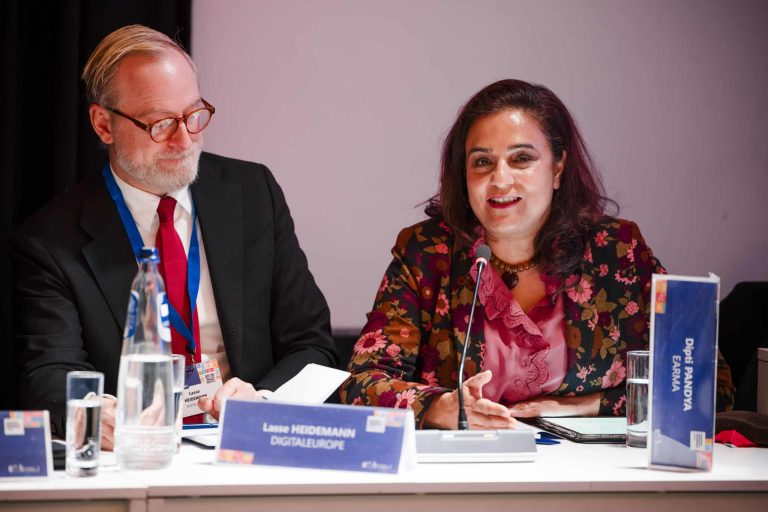
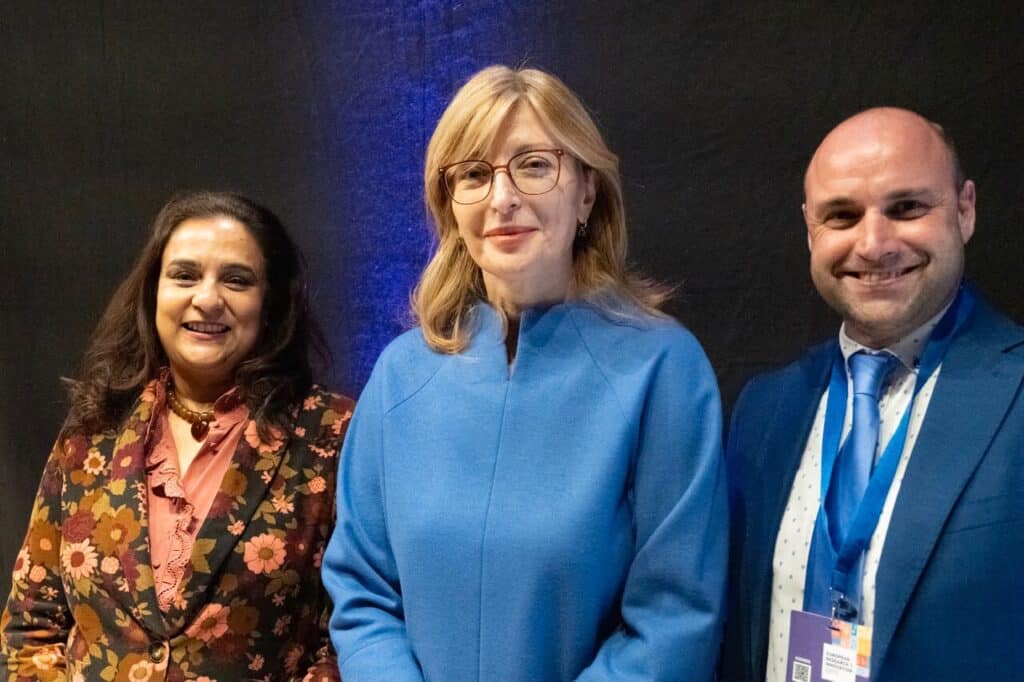
On November 10 and 11, EARMA Chair Dipti Pandya, Managing Director Ignasi Salvadó, and Policy and Project Officer Lorenzo Molina participated in the seventh edition of the European Commission’s European Research and Innovation Days. Bringing together policymakers, researchers, innovators, business leaders and civil society representatives, the event explored how research and innovation can strengthen Europe’s competitiveness.
Across the sessions, EARMA’s representatives followed discussions on scientific freedom, research performance, innovation financing, international cooperation, science diplomacy and the future of European research policy. His contributions highlighted the essential role of research managers in supporting excellent research, connecting research with society and industry, and enabling effective collaboration across borders.
Freedom of scientific research – a European advantage
The session on Freedom of Scientific Research – A European Advantage explored the importance of protecting academic freedom as a cornerstone of Europe’s research excellence and global standing.
Defending scientific freedom must remain a continuous priority. Researchers and institutions should be free to create knowledge, with specific strategic priorities guiding action where necessary but never undermining the fundamental freedom of scientific inquiry.
Between opennes and sovereignty – implementing the european strategy on research and technology infraestructures
Europe must balance its long-standing commitment to openness, international collaboration and open science with the need to strengthen its strategic resilience and protect critical technologies, knowledge and research assets in an increasingly complex geopolitical context. One year after the adoption of the European Strategy on Research and Technology Infrastructures, the session explored how openness and security can complement each other to ensure a strong and resilient European research and innovation ecosystem. Research managers and administrators play a key role in translating these priorities into institutional practices, managing research security risks and sensitive data, while facilitating responsible international collaboration.
Securing Europe’s growth: the role of research and innovation policy
The presentation of the European Commission’s Science, Research and Innovation Performance of the EU 2026 report provided an opportunity to reflect on Europe’s strengths and remaining challenges. The report offers a comprehensive overview of European performance in science, research, technology and innovation, as well as the factors influencing it.
Europe continues to demonstrate strong capabilities in areas such as sustainability and international scientific collaboration, while facing challenges in emerging technologies, particularly artificial intelligence, and in translating research strengths into technological leadership and economic impact.
Its data, analysis and insights can serve as useful background material when supporting researchers in the preparation of proposals and projects, informing strategic documents and demonstrating the state of the art in a particular field. These resources can help research managers strengthen the quality and strategic positioning of research proposals.
Bringing ideas to the market: the role of business angels in innovation financing
The discussion on business angels and innovation financing highlighted the importance of building confidence and understanding across Europe’s investment ecosystem.
In addition to the importance of simplifying procedures and creating a more secure environment for investors, there is a need to train new business angels, particularly in international investment, where understanding the rules and conditions of different countries and regions is essential to building trust and encouraging cross-border investment.
Research managers help researchers translate results into impact, support knowledge and technology transfer, and build bridges between scientists, companies and investors.
Strengthening open and secure international cooperation and science diplomacy
The session on international cooperation and science diplomacy highlighted the role of science in addressing global challenges and the importance of maintaining scientific collaboration, including when geopolitical conflicts persist.
Science diplomacy can help sustain dialogue and cooperation across borders. A more balanced global research and innovation ecosystem is needed that supports more equitable partnerships and international collaboration.
Research managers are already contributing to science diplomacy in their daily work. Whether based in EU liaison offices, international cooperation offices at universities and research centres, or managing projects involving partners around the world, they help make international collaboration possible.
Principles and values under a ‘New World Order’ and the role of association policy
The discussion on principles, values and association policy explored the importance of international partnerships in a changing geopolitical landscape. The perspectives shared by representatives from Moldova, Canada, the United Kingdom and Australia highlighted the value of continued cooperation with European partners.
Countries associated with Horizon Europe recognise the opportunities that participation in the programme offers, including access to funding and the possibility of strengthening scientific collaboration. Although the programme’s rules and procedures can be complex for organisations outside the European Union, there is strong interest in continuing to work with European partners and contributing to shared scientific objectives.
In this context, the potential for research managers across Europe to support colleagues in associated countries is key. Their experience and knowledge of Horizon Europe rules and processes can help partners navigate programme requirements, understand the funding framework and ensure the smooth implementation of collaborative projects.
Looking ahead: a strong and united European research community
The concluding high-level discussion brought together representatives of the European Parliament, the Irish government and the European Commission: Member of the European Parliament Christian Ehler, Irish Minister of State Marian Harkin, and Commissioner Ekaterina Zaharieva.
The discussion reinforced the importance of research and innovation for Europe’s competitiveness, resilience and strategic autonomy. Key priorities included strengthening freedom of scientific research, attracting and retaining scientific talent, moving towards a genuine European market for researchers and ensuring an ambitious budget for the next Framework Programme.
Commissioner Zaharieva also underlined the importance of simplifying procedures to make European research funding more accessible and effective, while highlighting the European Innovation Act and the upcoming ERA Act as important initiatives for strengthening the European research and innovation ecosystem.
A recurring message throughout the event was the importance of maintaining unity across the European research community. This reinforces a principle at the heart of EARMA’s mission: a strong and connected community of research managers makes the whole European research and innovation ecosystem stronger.
EARMA would like to thank all the speakers and moderators who contributed to the discussions during the European Research and Innovation Days. Their insights, expertise and commitment helped make these exchanges valuable opportunities to reflect on the future of European research and innovation and the role of the community in shaping it.